


follow us:


An electric flame plasma stove is a new cooking technology that uses electricity to create a flame-like heat through ionised air, without LPG or gas. It promises faster cooking and works with all utensils. However, experts say it is still expensive, experimental, and not widely available in India yet, with concerns about power consumption and […]
Google has introduced a major update for Gmail users. Like WhatsApp, Gmail now offers end-to-end encryption in its mobile app. This means only the sender and receiver can read emails, and no one in between can access them. The feature is currently available for Workspace users, improving security for personal data and business communications overall.

Sam Altman said a suspect hurled a Molotov cocktail at his San Francisco residence, allegedly driven by anger amid rising anxiety over Artificial Intelligence. No injuries were reported. The San Francisco Police Department arrested a 20-year-old suspect. Altman said his family was shaken and urged balanced policies, public awareness, and broader access to AI.
Artemis-2 has set a new record in space journey, surpassing the distance record once held by the Apollo-13 mission. The spacecraft reached about 2,48,655 miles from Earth, with a peak distance of 2,52,756 miles during its journey. This achievement highlights the progress of NASA’s deep-space missions and marks a key chapter in human spaceflight history.
➢World Homeopathy Day, ➢National Youth HIV and AIDS Awareness Day, ➢1898: Birth of writer Dashika Surya Prakash Rao, ➢1952: Birth of former Maharashtra CM Narayan Tatu Rane, ➢1986: Birth of musician Deepu, ➢1986: Birth of actress Ayesha Takia, ➢1995: Death of former Indian PM Morarji Desai and ➢1998: Death of spiritualist Vidya Prakash Nandagiri Swami.
The Telecom Regulatory Authority of India (TRAI) plans to bring free ad‑supported TV streaming services on LG, Samsung, Xiaomi smart TVs under formal regulation. These free channels, currently unregulated, could soon face licensing, content and advertising rules to align with traditional broadcasters. The consultation process aims to level the playing field.
NASA’s Artemis II crew, including Victor Glover, Reid Wiseman, Christina Koch, and Jeremy Hansen, are set to splash down tomorrow after a nearly 10-day mission. Flying 252,000 miles, they became the farthest humans from Earth, capturing lunar data, sharing emotional moments, and paving the way for Artemis III’s lunar landing and future Mars missions.
Tata Power is adopting Databricks enterprise-wide to unify data across operations, improving grid management, renewables forecasting, billing, and decision-making. Its AI agent Genie allows employees to query data directly for instant insights. CEO Praveer Sinha calls it a step toward a future-ready, intelligent energy ecosystem.
➢Kosovo Constitution Day, ➢National Winston Churchill Day, ➢1770: Birthday of German physicist Thomas Seebeck, ➢1893: Birthday of author Rahul Sankrityayan, ➢1974: Birth of world-famous porn star Jenna Jameson, ➢2014: Death of AP politician Ale Narendra, and ➢2020: Death of veteran Telangana activist Kaveti Sammaiah.
Zebronics Zeb Silencio 200T headphones have been launched in India at ₹2,999, offering up to 100 hours of playback without ANC. They feature 48dB hybrid active noise cancellation, 40mm drivers, dual microphones with ENC, and Bluetooth 6.0. The headphones also support gaming mode, fast charging, dual pairing, and app-based controls.
The Artemis II mission, featuring three Americans and one Canadian, offers a 10-day glimpse of global unity. Through NASA photos, GoPro footage, and live transmissions, astronauts document milestones, inspiring millions worldwide. Victor Glover reflected on shared humanity, while the mission captivates viewers from classrooms to cruise ships.
ISRO Chairman V Narayanan highlighted mission operations as crucial for India’s space success at SMOPS-2026, citing Chandrayaan-3, Aditya-L1, and Gaganyaan. He emphasized teamwork, continuous spacecraft monitoring, AI and cloud integration, and operational precision as key to long-duration missions and strengthening India’s global space presence.
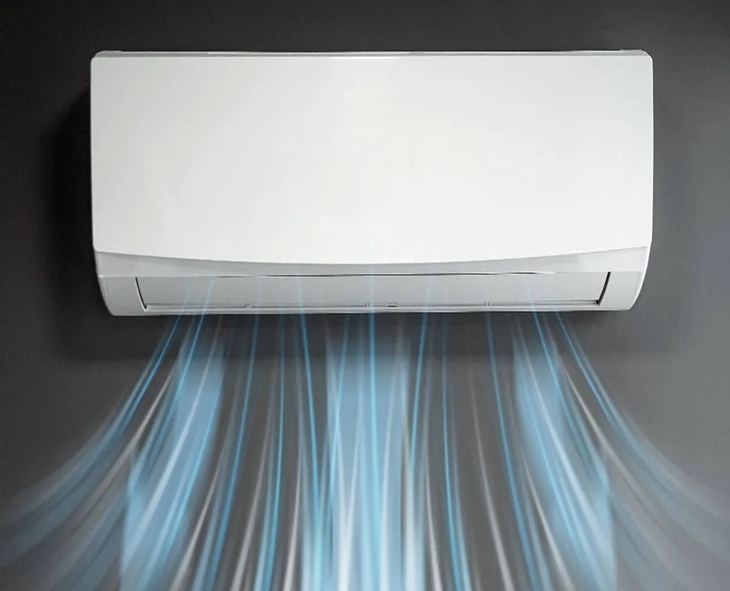
If your air conditioner still isn’t cooling after servicing, the cooling coil, either the evaporator or condenser, might be the hidden culprit. Problems like dirt buildup, damage, or poor airflow around the coil can disrupt heat exchange, reducing cooling efficiency even after routine maintenance. Proper cleaning, inspection, and possible coil repair may be needed.
➢International Kids’ Yoga Day, ➢International Pageant Day, ➢1857: Death of top freedom fighter Mangal Pandey. ➢1894: Death of Bankinchandra Chatterjee, writer of Vande Mataram, ➢1977: Death of Shankarambadi Sundarachari, lyricist of ‘Maa Telugu Talliki.’ ➢1983: Birthday of Icor star Allu Arjun, and ➢2013: Death of Britain’s first female PM, Margaret Thatcher.
NASA’s Artemis II astronauts flew deeper into space than any humans, conducting a rare six-hour flyby of the moon’s shadowed far side. From 4,070 miles above the surface, they observed meteors striking the cratered terrain, capturing real-time data and images. This marks the first human voyage near the moon since Apollo, over 50 years ago.